
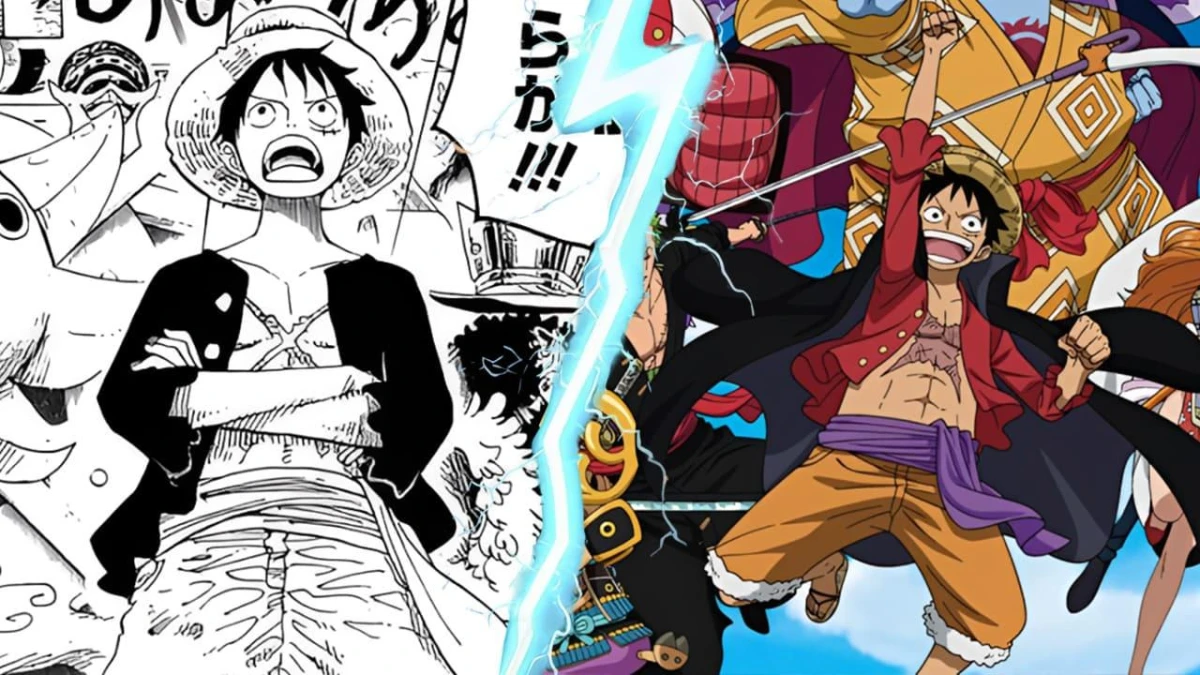
The differences between the One Piece manga and anime show up in pacing, censorship, character expressions, and filler episodes. Here are the 10 main ones.
The differences between the One Piece manga and anime are a common topic among fans. Eiichiro Oda’s series has been running for more than two decades. The anime is adapted directly from the manga, but the two are not identical.
These changes come from the demands of adapting a story for the screen, including running time, censorship rules, and the limits of each medium. The manga stands out for its tight pacing and freedom in panel layout. The anime adds color, background music, sound effects, and extra scenes. However, the story moves more slowly in the anime, and the animation quality rises and falls.
The 10 Main Differences Between the One Piece Manga and Anime
The first difference is pacing. The anime studio has to keep a gap so it doesn’t catch up to the manga too quickly. As a result, many scenes are stretched out, such as Luffy’s duel against Katakuri. In the manga, the same fight goes straight to the point.
Second, the studio inserts filler episodes to give Oda time to finish the latest chapters. The G-8 arc is an example, since it never appeared in the manga. Fan reactions varied, but the arc has been widely praised, and its story is considered a good one. Third, dialogue in the anime is often made longer. The conversation between Luffy and Rayleigh about Haki gets extra explanation, while the manga delivers it briefly. The additions sometimes provide context, but they can also feel dull.
Fourth, there is color. The manga is in black and white, while the anime uses full color. Shanks’s hair looked lighter in the early anime promotional material. Some characters’ eye colors also differ from the color covers of the manga.
Fifth, facial expressions. The manga shows exaggerated, comedic expressions, especially on Luffy and Usopp. The anime softens these expressions to keep the moving images stable. As a result, dramatic reactions feel stronger in the manga.
Sixth, panel layout and camera angles. Oda is free to arrange panels on the comic page, while animation is bound to camera angles. For this reason, the Battle of Marineford feels more tense in the manga.
Seventh, censorship of violence. The anime adjusts to television broadcast standards so a wider audience can watch it. In the manga, Zoro’s duel against Mr. 1 shows severe wounds and clearly visible blood. In the anime, the wounds and blood are toned down.
Eighth, music and sound effects. The anime has an audio advantage that print media does not. The song “Binks no Sake,” sung by Brook, feels more moving in the anime thanks to the background music. In the manga, readers rely only on text and images.
Ninth, animation quality is inconsistent. The production team, studio, technology, and budget have changed over time. The Wano arc was praised for its detailed, dynamic visuals. Some episodes from earlier arcs, on the other hand, have been criticized for rough-looking artwork.
Tenth, added and removed scenes. The anime often cuts small interactions between members of the Straw Hat crew. On the other hand, it adds flashbacks and character backstories that the manga explains less.
The table below summarizes the differences between the One Piece manga and anime.
| Element | Manga | Anime |
|---|---|---|
| Pacing | Fast, tight, straight to the point | Slower, with many scenes stretched out |
| Visuals | Black and white, extreme expressions | Full color, softer expressions |
| Censorship | Blood and wounds shown clearly | Blood and wounds toned down |
| Story | Purely canon, by Oda | Includes filler episodes, such as the G-8 arc |
| Audio | Silent, relies on the reader’s imagination | Voice actors (seiyuu), sound effects, and background music |
| Dialogue | Short and direct | Extended with monologues and explanations |
| Character interactions | Small crew moments shown in full | Some cut, but more backstory added |
Seiyuu (Japanese voice actors) also play a big role in the anime. Their intonation, voices, and expressions help viewers connect with the characters. This adds one more difference between the One Piece manga and anime that can’t be found on the comic page.