
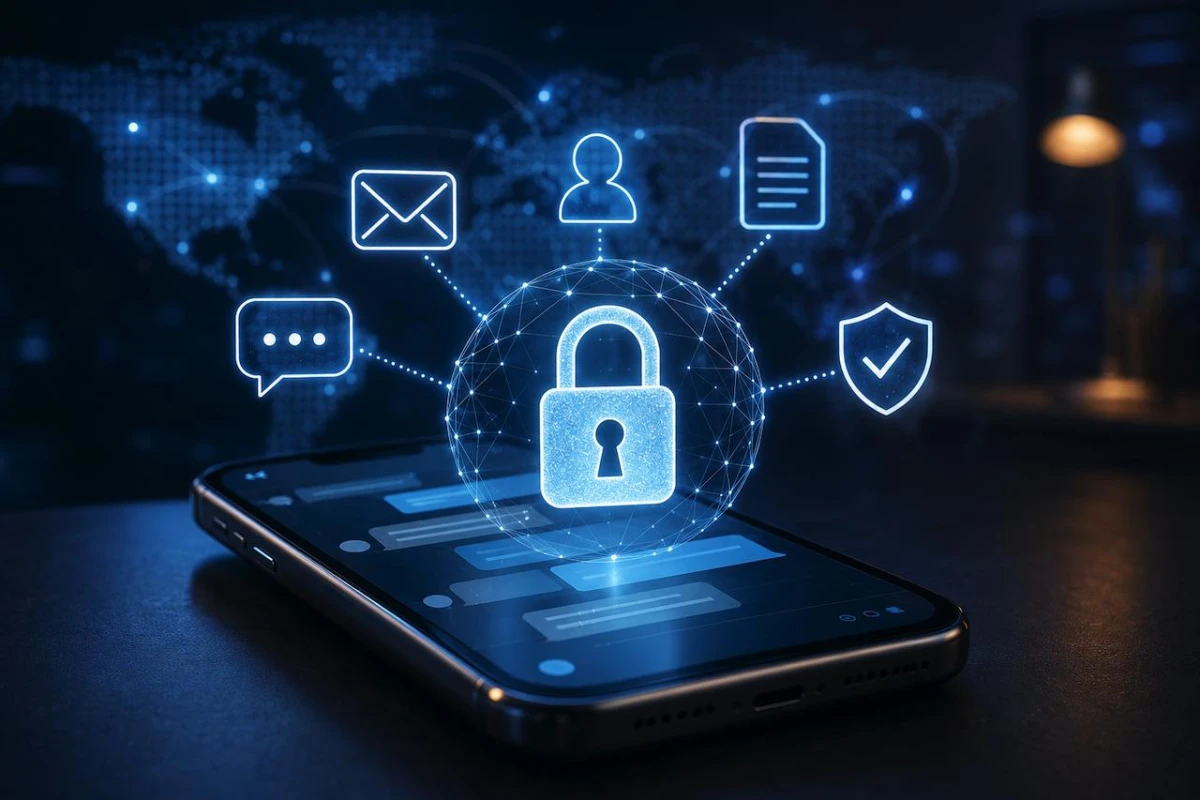
End-to-end encryption means only the sender and the recipient can read a message. Learn what it is, how it works, and how it helps protect your personal data.
End-to-End Encryption: Message Security That No One Else Can Read
This technology makes the content of a conversation open only to the sender and the recipient.
End-to-end encryption is a data security method that turns the content of a message into random code on the sender’s device. That code can only be unlocked on the recipient’s device. While the message is in transit, no one else can read it.
Many messaging apps already use this system. WhatsApp, Signal, and iMessage apply it to private conversations. Telegram offers it only through its secret chat feature. Users usually see a notice or a padlock icon inside the chat.
This method differs from standard encryption. With standard encryption, data is protected only while it travels between the device and the server. The server still holds the key and can open the message. With end-to-end encryption, the service provider does not hold the key.
How End-to-End Encryption Works
In end-to-end encryption, every user has a pair of keys: a public key and a private key. The public key can be shared with anyone. The private key stays on the device and is never sent anywhere.
When you send a message, the app locks its content using the recipient’s public key. The locked message passes through the service provider’s server. The server only forwards random, unreadable data.
Once the message arrives, the recipient’s device opens it with their private key. Only that key matches the public key used to lock the message. The whole process runs automatically within seconds, so users don’t need to set anything up.
Benefits of End-to-End Encryption
The biggest benefit is conversation privacy. A hacker who snoops on a public Wi-Fi network gets only random data. The service provider and third parties also can’t read the content of your messages.
The system protects sensitive data such as bank account numbers, work documents, and personal photos. Journalists, lawyers, and medical professionals use it to keep their sources, clients, and patients confidential. If a server is hacked, the content of messages stays safe.
This protection has limits. Anyone holding your phone while it is unlocked can still read your messages. Chat backups in cloud storage may also be unencrypted if the user hasn’t turned on that option. For this reason, set a screen lock and check your backup settings so end-to-end encryption works as well as it can.